
Crashed on the H-1? How to Navigate the 2026 Honolulu Police “Green Slip” System
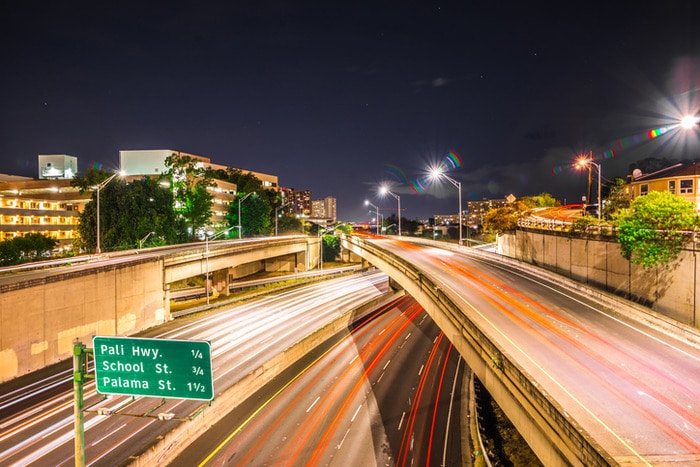
The H-1 Freeway is the backbone of O’ahu’s infrastructure, but it is also the most common site for high-speed, multi-vehicle collisions in Hawaii. From the tight merges at the Middle Street interchange to the heavy congestion near the University of Hawaiʻi at Mānoa, an H-1 accident can happen in a split second. However, what you do in the sixty minutes following a crash will determine the success of your legal recovery.
In 2026, the process for documenting an accident on O’ahu has become increasingly digital, yet many drivers still find themselves stranded with nothing but a “Green Slip” and a mounting stack of medical bills.
Understanding the HPD “Green Slip” vs. The Formal Report
When the Honolulu Police Department (HPD) arrives at an H-1 accident scene—especially during peak traffic hours—their primary goal is to clear the roadway and restore traffic flow. To do this quickly, officers often issue what is colloquially known as a “Green Slip.”
This slip is officially a Motor Vehicle Accident Report stub. It contains a basic incident number, the officer’s name, and the date. Many victims leave the scene thinking their work is done. This is a critical mistake. A Green Slip is not evidence of fault; it is merely a receipt. To build a winning case, a Honolulu personal injury lawyer must help you obtain the full, formal HPD report from the Records and Identification Division at 801 South Beretania Street.
The formal report includes:
- Officer Diagrams: Professional sketches of vehicle positioning at impact.
- Witness Statements: Contact info and initial accounts from other drivers.
- Citation Data: Whether the other driver was ticketed for an illegal lane change or following too closely.
The 72-Hour Evidence Window: Subpoenaing “GoAkamai” Footage
One of the most powerful tools for a personal injury lawyer in Honolulu in 2026 is the Hawaii Department of Transportation’s (HDOT) traffic camera network.
The GoAkamai system provides real-time monitoring of major H-1 arteries. However, there is a catch: HDOT typically does not archive this footage indefinitely. In many cases, freeway footage is overwritten within 72 hours unless a formal preservation letter or subpoena is issued. If you were sideswiped near the Lunalilo Street off-ramp, that camera footage could be the only objective “eye-witness” to the crash. We act immediately to freeze this data before it is lost to the digital void.
Navigating the “Sudden Emergency” Defense on O’ahu Freeways
Insurance companies on O’ahu are notorious for using the “Sudden Emergency Doctrine.” They argue that because traffic on the H-1 stopped abruptly—a common occurrence near the Pearl City merge—their client’s rear-end collision was an unavoidable “emergency” rather than negligence.
As your legal team, we counter this by analyzing:
- Braking Data: Modern vehicles (Model Year 2022+) store “Black Box” data that proves if a driver was distracted or failed to apply brakes in time.
- HPD Dashcam/Bodycam: We request the responding officer’s footage to see the immediate post-crash statements made by the at-fault driver.
- Pavement Conditions: Was there a recent “Kona Storm” that contributed to hydroplaning? We tie the weather data to the driver’s duty to adjust speed for conditions.
Why the First Circuit Court Matters for Your H-1 Claim
If your H-1 accident resulted in significant injuries, your case will likely be filed in the First Circuit Court (Kaʻahumanu Hale) on Punchbowl Street. Unlike national firms that may try to settle your case over the phone from a mainland office, we are physically present in Honolulu’s courts every week.
This local presence is vital because Hawaii uses a “Modified Comparative Negligence” standard (HRS § 663-31). If a jury finds you even 51% at fault for the accident, you recover zero. A local Honolulu personal injury lawyer understands how Honolulu juries view freeway merges and “Aloha spirit” driving habits, allowing us to frame your case in a way that protects your right to compensation.
5 Immediate Steps After an H-1 Crash
- Move to the Shoulder: Only if safe. H-1 secondary collisions are often more dangerous than the initial wreck.
- Photograph the Landmarks: Don’t just take pictures of the cars; take pictures of the nearest exit sign or mile marker to establish exact jurisdiction.
- Keep the Green Slip: This incident number is the “key” to your entire digital file.
- Seek Care at Queen’s or Straub: Even if you feel “fine,” the $5,000 PIP medical threshold in Hawaii requires immediate medical documentation.
- Call a personal injury lawyer in Honolulu: Do not give a recorded statement to the other driver’s insurance adjuster until you have spoken with counsel.